
Home › Steeple Chase 200L › Physiology
Physiology MCQs with answers and explanations
ECG, cardiac action potential, equipment, blood groups and circulation. This set has 10 questions (2 multiple-choice plus labelled-figure and written questions), each with the correct answer and an explanation. Free on CHAS Quiz – no sign-up needed.
Practise all 10 questionsTake it as a timed examSample questions
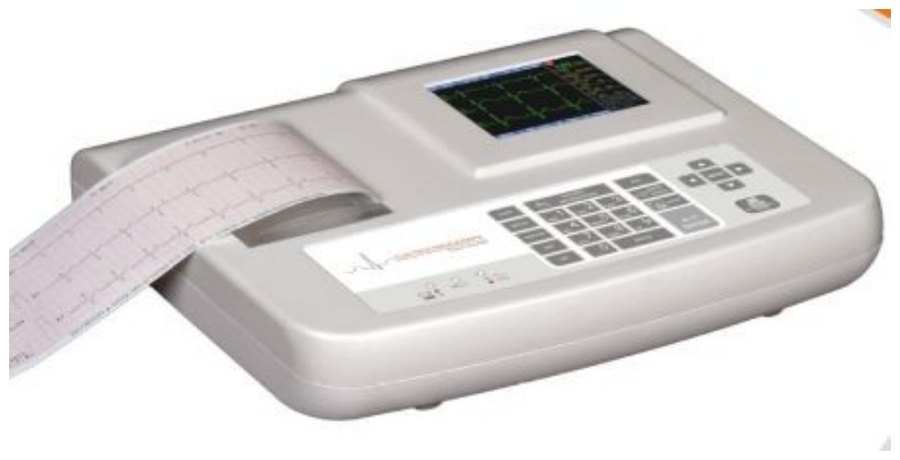
1. (a) What is the name of the machine above?
(b) List three conditions that can be diagnosed by this machine
Answer
(a) Electrocardiograph (ECG machine).
(b) Diagnoses: (i) myocardial infarction; (ii) cardiac arrhythmias (e.g. atrial fibrillation); (iii) heart block (also ventricular hypertrophy, electrolyte imbalance).
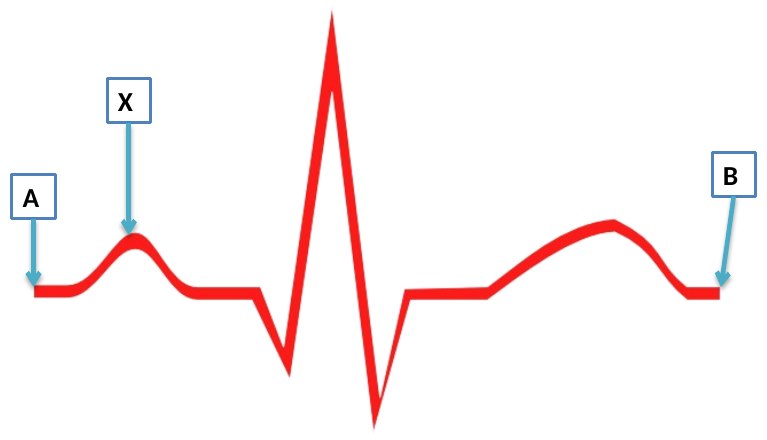
2. (a) In the diagram above, what does the part labelled ‘X’ represent?
(b) How many seconds does it take from point ‘A’ to point ‘B’ in an average human being?
Answer
(a) X = P wave: atrial depolarization.
(b) About 0.8 seconds (one complete cardiac cycle at about 75 beats/min).
3. (a) Draw a diagram depicting the nature of cardiac action potential.
(b) What ion is responsible for the plateau phase in cardiac action potential?
Answer
(b) Calcium ions (Ca2+) influx through slow L-type Ca2+ channels maintains the plateau (phase 2).
(a) Diagram on the right: phase 0 rapid depolarization (Na+ in), phase 1 early repolarization, phase 2 plateau (Ca2+ in, K+ out), phase 3 repolarization (K+ out), phase 4 resting potential about -90 mV.
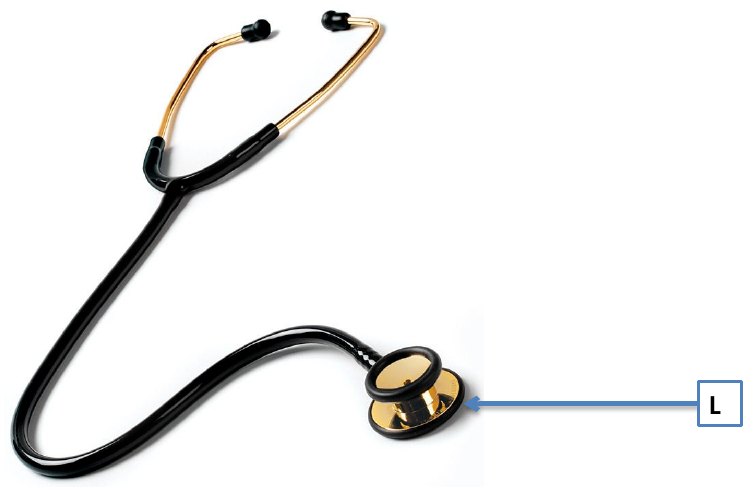
4. (a) List two limitations of this piece of medical equipment.
(b) What is the part labelled ‘L’ ?
Answer
(a) Limitations: (i) sounds are subjective and depend on the examiner's hearing; (ii) ambient noise interferes and it cannot detect very soft or very low-pitched sounds; (iii) no permanent record.
(b) L = Chest piece (diaphragm / bell).
5. (a) Define apoptosis
(b) List 2 instances in which apoptosis is important.
Answer
(a) Apoptosis is programmed (physiological) cell death: an orderly, energy-dependent, gene-regulated process in which the cell shrinks and fragments into apoptotic bodies, without inflammation.
(b) Important in: (i) embryonic development, e.g. separation of fingers and toes; (ii) removal of damaged or mutated cells (prevents cancer) and deletion of self-reactive lymphocytes.
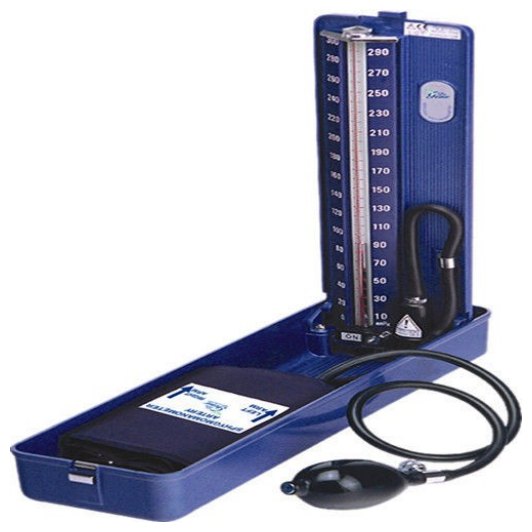
6. List three methods of measuring blood pressure by this instrument
(b) What is the normal blood pressure for an average human being?
(c) Name the instrument above.
Answer
(a) Methods: palpatory, auscultatory and oscillometric (flush).
(b) Normal BP = 120/80 mmHg.
(c) Mercury sphygmomanometer.
7. Blood group O+ is a universal donor
- True
- False
Answer: B. False
The universal donor is O negative (O-). O+ can donate only to Rh-positive recipients.
8. Blood group AB+ is the universal acceptor
- True
- False
Answer: A. True
AB positive (AB+) has no anti-A, anti-B or anti-D antibodies in the plasma, so it can receive from all blood groups.
Continue with the remaining 2 questions
More Steeple Chase 200L topics
- Gross Anatomy – 10 questions
- Histology – 10 questions
- Embryology – 8 questions