
Home › Steeple Chase 200L › Embryology
Embryology – picture and essay questions with answers
Congenital conditions, chromosomal syndromes and early development. This set has 8 questions, each with the correct answer. Free on CHAS Quiz – no sign-up needed.
Practise all 8 questionsSample questions
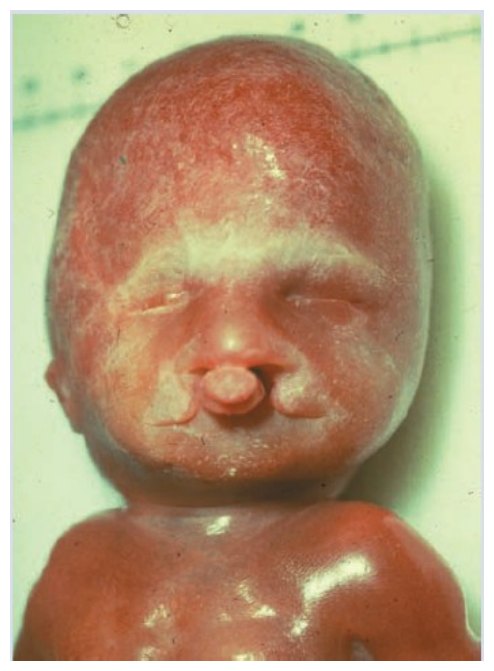
1. List two features seen on the above malformed infant.
Answer
Features (holoprosencephaly): (i) closely set eyes (hypotelorism) / cyclopia; (ii) proboscis-like nose with a single nostril (cebocephaly) and midline facial defect.
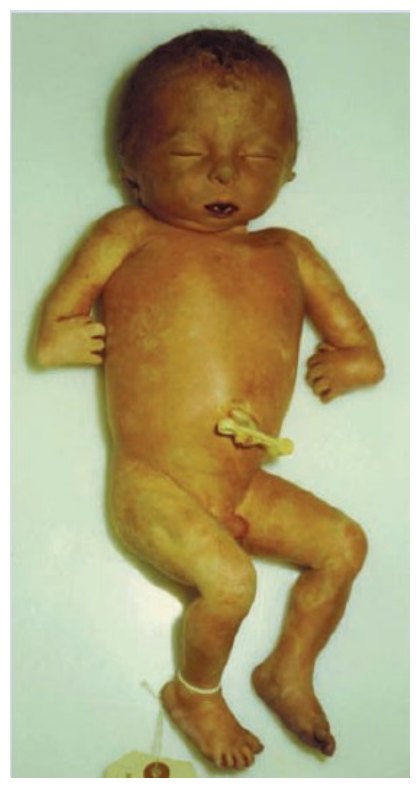
2. (a) What is this condition?
(b) List three features of this condition.
Answer
(a) Trisomy 18 (Edwards syndrome).
(b) Features: (i) clenched fists with overlapping fingers; (ii) micrognathia and low-set malformed ears; (iii) rocker-bottom feet (also prominent occiput, congenital heart defects).
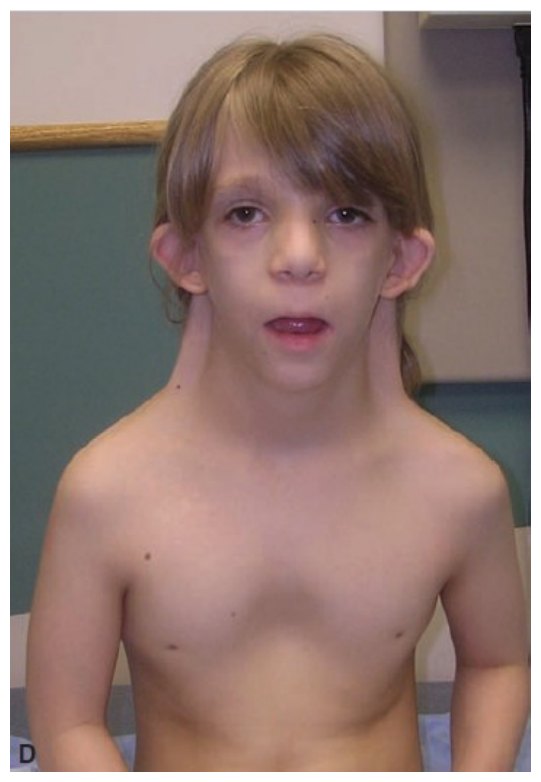
3. (a) What is this condition?
(b) What is the cause?
Answer
(a) Turner syndrome (45,X).
(b) Cause: monosomy X from non-disjunction of the sex chromosomes during gametogenesis (loss of one X).
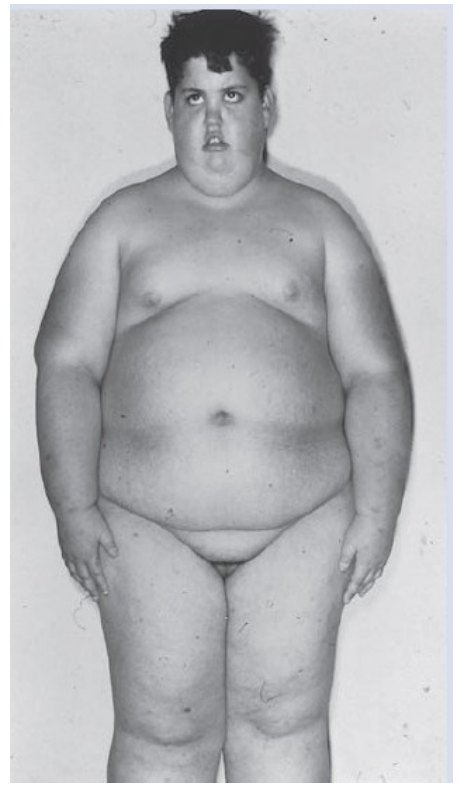
4. (a) What is the name of this condition?
(b) What is the name of the condition cause when the chromosome deleted is on the other parent of a different gender?
Answer
(a) Prader–Willi syndrome (obesity, hypogonadism, hypotonia, intellectual disability).
(b) Angelman syndrome (deletion of 15q11–q13 on the maternal chromosome; in Prader–Willi it is the paternal one).
5. (a) What are the two microscopic structures seen here?
(b) What is the process meant to occur between them?
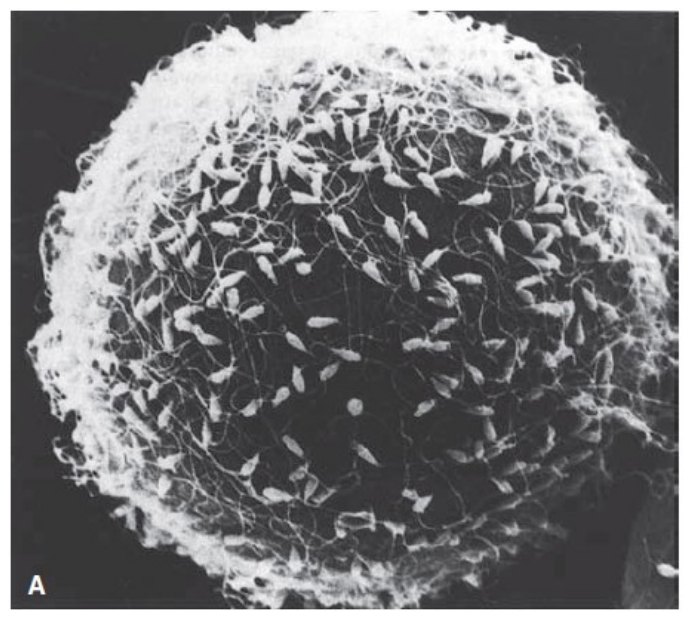
Answer
(a) Spermatozoa and the secondary oocyte (surrounded by zona pellucida and corona radiata).
(b) Fertilization.
6. This is a Fully implanted 12-day human blastocyst (×100). What are the structures labelled ‘B’ and ‘D’ ?
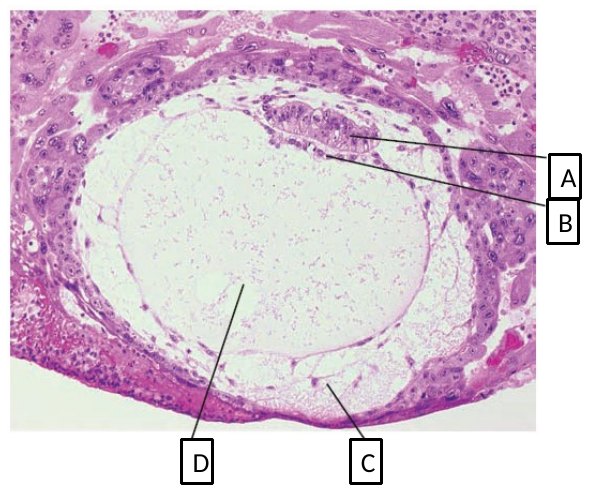
Answer
B = Hypoblast (lower layer of the bilaminar embryonic disc).
D = Primary (exocoelomic) yolk sac / extra-embryonic coelom (A = epiblast).
7. What causes the condition shown in picture ‘A’ above?
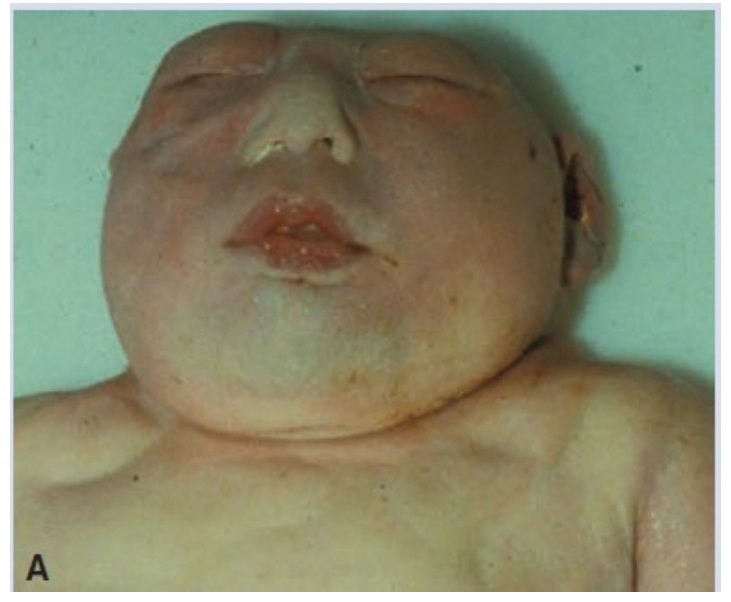
Answer
Picture A shows Turner syndrome (45,X): neck swelling from cystic hygroma / lymphedema. It is caused by monosomy X from non-disjunction of the sex chromosomes.
8. (a) What cause the condition seen above?
(b) List three features seen a male with this condition.
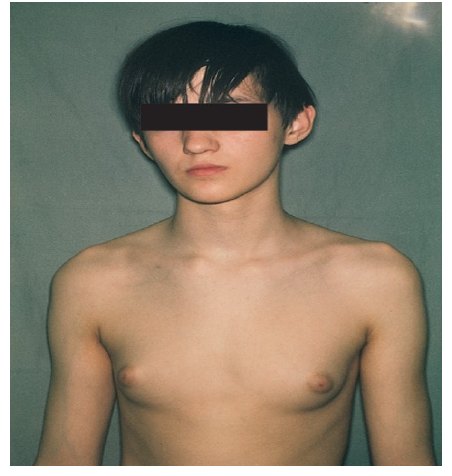
Answer
(a) Klinefelter syndrome (47,XXY): non-disjunction giving an extra X chromosome in a male.
(b) Features in a male: (i) tall with long limbs; (ii) gynaecomastia; (iii) small firm testes with infertility (azoospermia).
Continue with the remaining 0 questions
More Steeple Chase 200L topics
- Gross Anatomy – 10 questions
- Histology – 10 questions
- Physiology – 10 questions